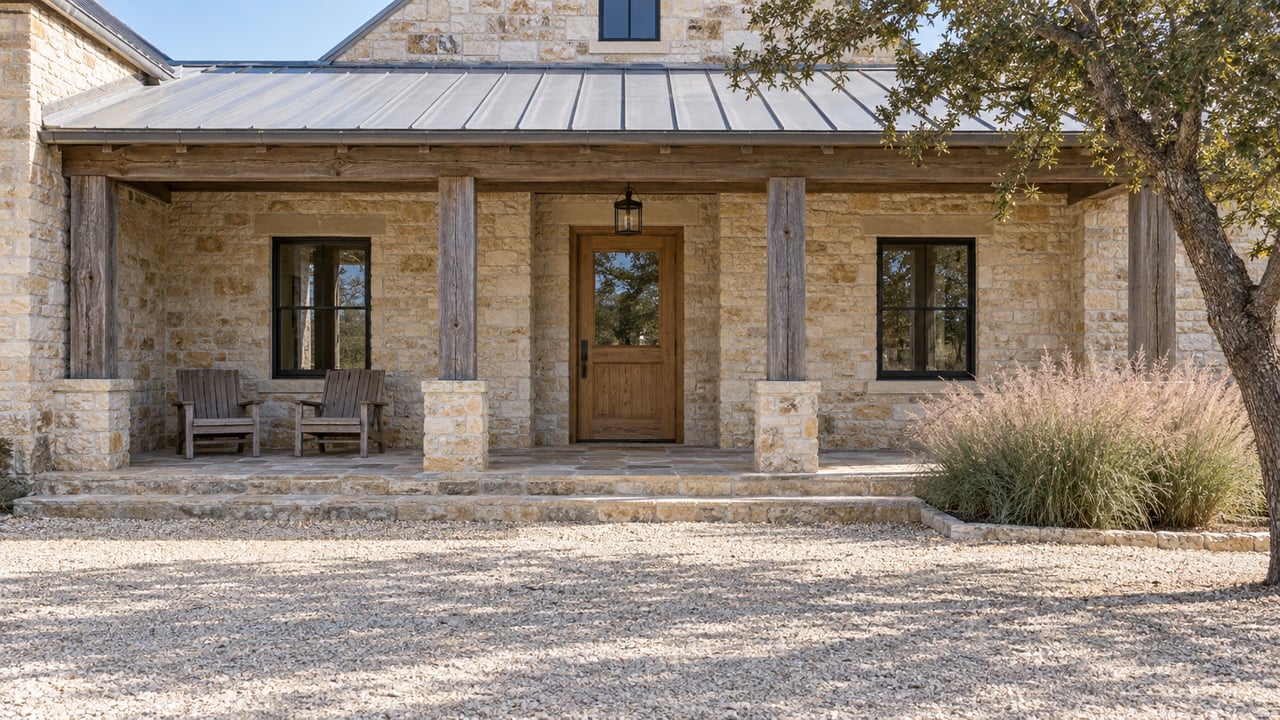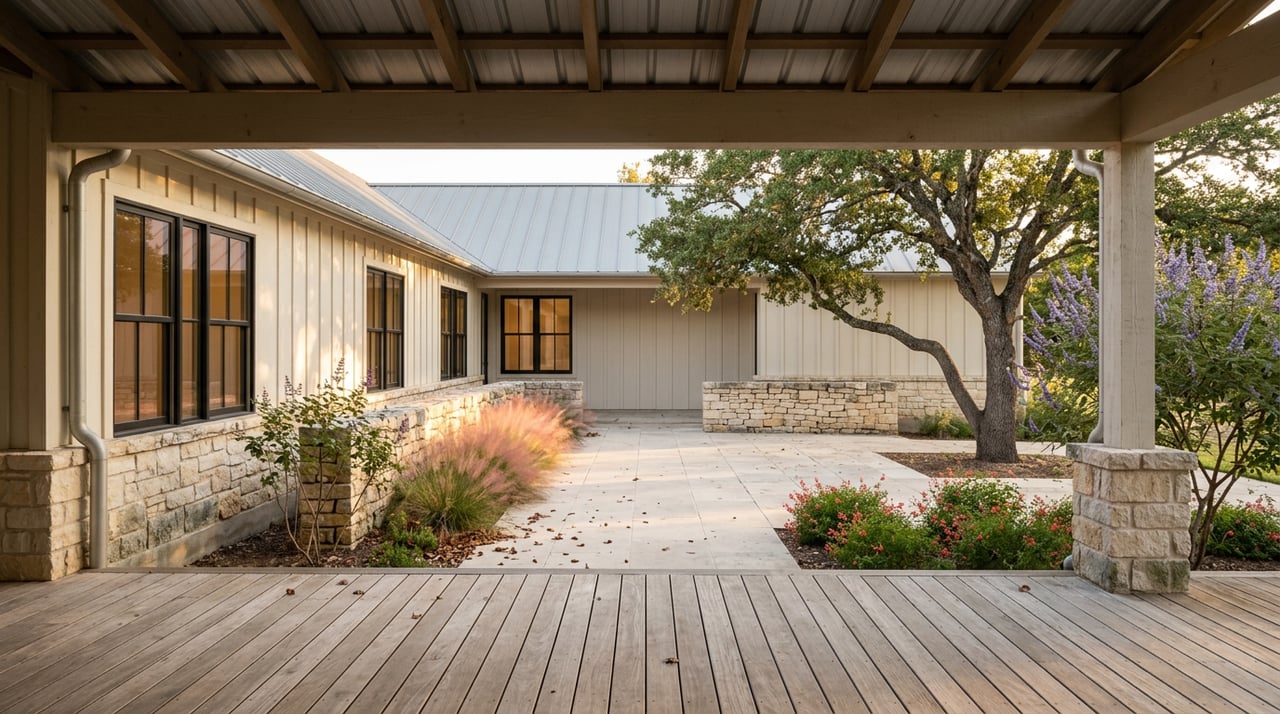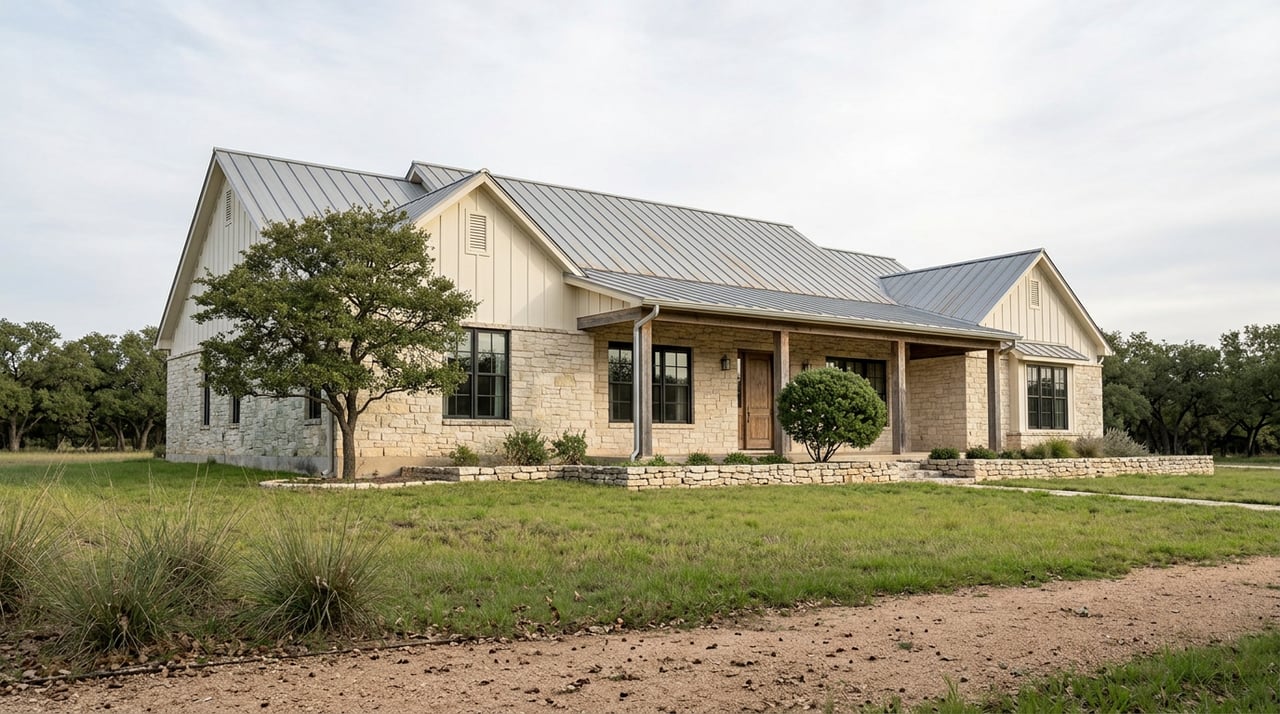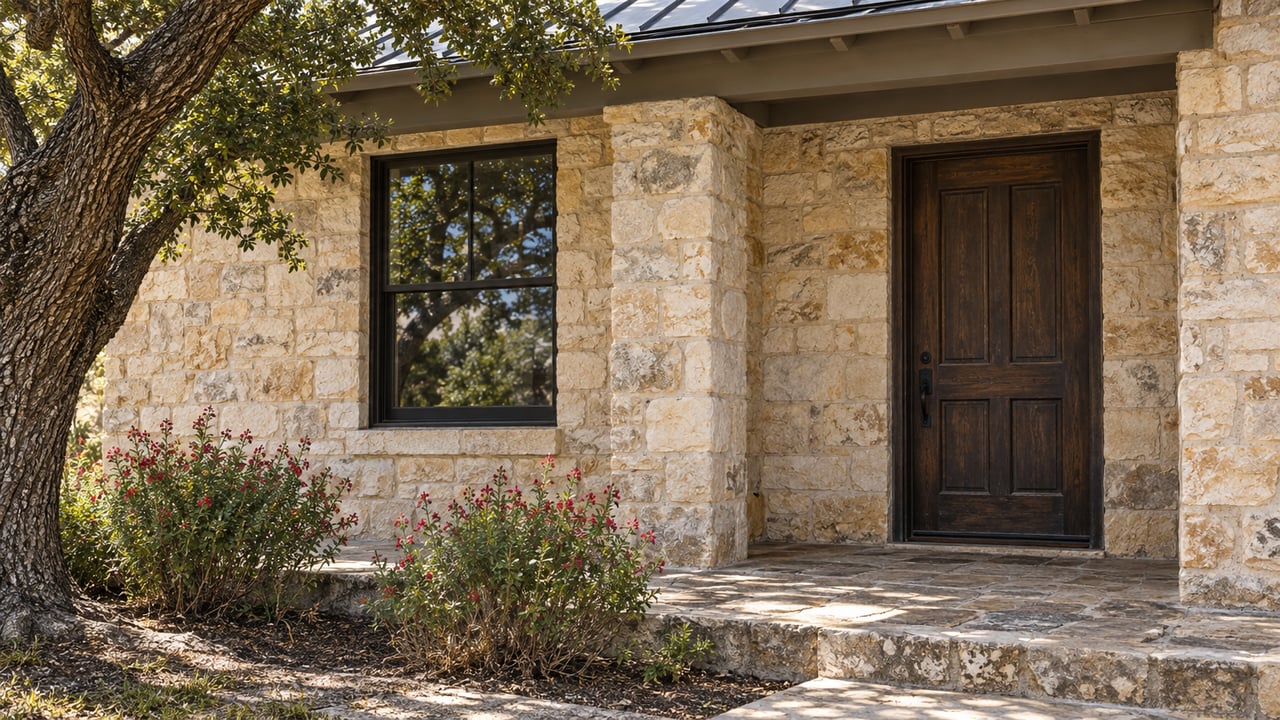
A circa-1915 stone house sits just off Historic High Street in downtown Comfort, the kind of full-stone build with hardwood floors and a rock fireplace that photographs well from any angle. The listing description calls it suited for "commercial use or as an enchanting personal residence." That phrasing isn't marketing filler. It's pointing at the one distinction that actually matters if you're buying inside Comfort's National Register district, and it has nothing to do with the building's age or its stonework.
Most buyers walk into Comfort assuming the historic designation cuts one of two ways. Either it means red tape, design review boards, and a slow permit process before you can touch a window. Or it means an automatic tax break for owning something old. Neither assumption holds up. The designation itself does almost nothing to a private owner. What changes everything is whether the building produces income.
What the Listing Actually Covers
The Comfort Historic District was listed on the National Register of Historic Places in 1979 and its boundary was expanded in 2004, a change documented in the Texas Historical Commission's own Atlas record for the boundary increase. Today the district takes in more than 100 buildings representing roughly a century of construction, from 1854 through 1954, according to the National Register listing. That span shows up on the ground. A short walk down High Street passes half-timbered fachwerk construction with limestone infill, stone vernacular storefronts, Queen Anne detailing, and later bungalow and Craftsman influence, all inside the same few blocks. Hotel Giles, built in 1880 by San Antonio architect Alfred Giles, anchors the district and gives a sense of scale for what "contributing" looks like here.
None of that history requires an owner to do anything in particular.
What the National Register Doesn't Do
The Texas Historical Commission is direct about this. National Register listing is an honorary designation. It places no restrictions on what a private owner can do with a building, including alteration, expansion, or sale, unless the project involves federal grant funding, licensing, or a tax credit claim. There's no requirement to display a plaque, no mandatory design review board looking over an owner's shoulder before a roof replacement, and no city-level historic preservation office weighing in, because Comfort is unincorporated. Permitting and planning here run through Kendall County and a handful of special districts, not a city hall. That matters more in Comfort than in a place like Fredericksburg, where a municipal government could layer its own ordinance on top of the federal listing. Comfort has no such layer.
So a buyer who wants the 1915 stone house purely as a home can renovate the kitchen, replace the roof, and repaint the trim without clearing it through a historic commission first. The building's age creates a maintenance profile worth budgeting for, roofs, gutters, masonry, and older electrical and plumbing systems all deserve a closer look during inspection, but it doesn't create a permission structure.
Where the Money Actually Lives
This is where the listing description's "commercial use or personal residence" framing starts to make sense. The federal government offers a 20 percent tax credit for certified rehabilitation of historic buildings, and Texas offers its own 25 percent credit through the Texas Historic Preservation Tax Credit Program. Both explicitly exclude owner-occupied residential property. The credits are built for buildings that produce income: hotels, rental housing, offices, retail space, or nonprofit use. A homeowner living in a contributing building on High Street gets zero access to either credit, no matter how carefully the rehabilitation follows the Secretary of the Interior's standards.
Flip the use and the math flips with it. The same stone house, converted to a bed and breakfast, a tasting room, or professional office space, becomes a candidate for both credits, provided the rehabilitation goes through a staged review with the Texas Historical Commission and the National Park Service. That's a formal process with real documentation requirements, not a quick form. It's also the only path in this district where "historic" translates into a direct financial return rather than just a design aesthetic.
| Intended use | Local design review required | Federal/state tax credit eligible |
|---|---|---|
| Owner-occupied personal residence | No, Comfort has no city landmark commission | No, residential use is explicitly excluded |
| Income-producing rehab (rental, inn, office, retail) | No local layer, but federal/state credit review applies if credit is claimed | Yes, if certified through THC and NPS review |
| New construction or major alteration inside the district boundary | No permit trigger from the National Register itself | Not applicable unless replacing a contributing structure with credit-eligible income use |
The Status That Can Move Under You
There's a second layer that buyers planning a future resale or a future use change should know about. Every building inside a National Register district carries a status as either "contributing" or "non-contributing" to the district's significance. A contributing building retains its historic character and relates to the period the district documents. A non-contributing building, often because of a substantial addition or a loss of original material, doesn't. The Texas Historical Commission is explicit that this status isn't frozen at the moment of listing. It can be reevaluated over time based on what happens to the building, meaning a heavy remodel today could affect whether that same building qualifies for the rehabilitation credit if a future owner tries to convert it to income-producing use. The district boundary itself doesn't move. The building's standing inside it can.
Three Ways This Plays Out
A buyer looking for a personal residence inside the district gets the upside without the paperwork. No design board, no certificate of appropriateness, no waiting period. The real diligence work is the same work any buyer of a century-old building should do anywhere: a close look at the roof, foundation, masonry, and mechanical systems, since none of that gets easier just because the house sits inside a historic boundary.
An investor eyeing that same stone house for a short-term rental or a small commercial use is looking at a genuinely different asset. The tax credit path is real, but it requires committing to income-producing use, documenting the rehabilitation to federal standards, and running the project through both state and federal review before the credit becomes usable. That's a longer runway than a straightforward purchase, and it's worth pricing that timeline into any offer.
A seller marketing a historic home in Comfort needs to be precise about which claims apply. Advertising an owner-occupied historic home as tax-advantaged because of its National Register status isn't accurate unless the buyer intends income-producing use. Marketing that leans on the building's age and craftsmanship, which is genuinely valuable here, holds up better than marketing that implies a credit any residential buyer can claim.
If you're weighing a rural purchase near Comfort alongside an in-town historic property, the ownership picture gets one more layer. Acreage outside the historic core may carry its own agricultural or wildlife valuation through the county appraisal district, a separate system from anything tied to the historic designation, and changing that land's use can trigger rollback taxes under the Texas Comptroller's guidance on agricultural appraisals. Near-town lots connected to Kendall County's water utility also fall under its drought contingency stages, which can affect irrigation planning for a property with mature landscaping. None of this touches the historic designation directly, but it's part of the same due diligence conversation for anyone assembling a Comfort property that spans both the town lot and the land around it.
A few questions worth asking directly
Does buying a home in the Comfort Historic District mean I need approval before renovating? Not from a local landmark commission, since Comfort has no city government to run one. The National Register listing itself imposes no restriction on a private owner unless federal grant funds or a tax credit claim are involved.
Can I get a historic tax credit for a house I plan to live in? No. Both the federal 20 percent credit and the Texas 25 percent credit are limited to income-producing or nonprofit use. Owner-occupied residential property doesn't qualify under either program.
Does a building's contributing status ever change? Yes. The Texas Historical Commission can reevaluate a property's contributing status over time based on alterations or loss of historic material, which matters if a future owner wants to pursue rehabilitation credits.
If you're comparing a historic High Street property against acreage or new construction elsewhere in Kendall County, it helps to walk through what each option actually does and doesn't offer before you write an offer. Take a look at our Comfort neighborhood guide for more on the area, and when you're ready to talk specifics, Wynne-Smith Horton Real Estate Group is glad to walk through the diligence with you.